How Therapy Slows Progression and Builds Confidence
A Parkinson’s diagnosis does not arrive all at once. It reveals itself gradually.
A hand that moves a little slower.
A step that feels less certain.
A voice that no longer carries the way it used to.
What begins as subtle becomes undeniable. And for many, the hardest part is not just physical change, but the quiet realization that things once automatic now require intention. For patients at Methodist Rehabilitation, therapy becomes the bridge between those two realities. Not a cure, but a way forward. Not a reversal, but a reclaiming.
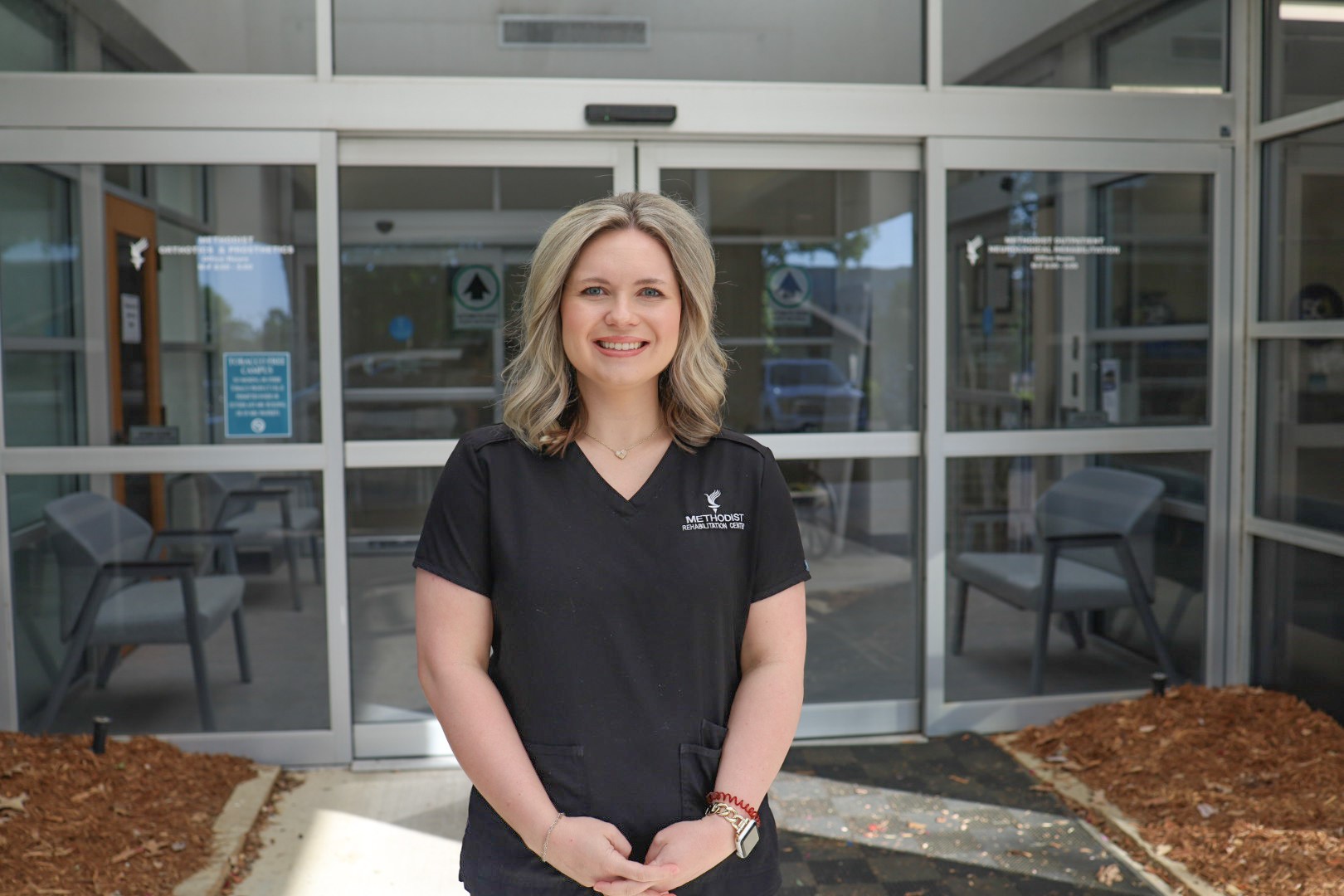
“Every person is different,” says Physical Therapist Assistant Madison Winstead. “But most of what we see comes back to how the brain is controlling movement.”
When Movement Changes, Life Changes with It
Parkinson’s disease alters the body in ways that ripple into everyday life.
“One of the first things people notice is bradykinesia, or slowness of movement,” Winstead explains. “You see tremors, rigidity, posture changes, and decreased balance, which can lead to more frequent falls over time.”
But the deeper impact is not just clinical. It’s personal.
“These changes make it harder to do everyday tasks like getting dressed, cooking dinner, and enjoying hobbies,” she says. “Multitasking becomes more difficult. You may also see fatigue and notice voice and cognitive changes.”
In other words, the disease does not just affect how a person moves. It affects how they live.
The Cost of Waiting
There is a common instinct to delay therapy. To wait until symptoms become more pronounced.
Winstead challenges that instinct.
“Therapy should begin as early as possible, even if symptoms are mild,” she says. “You don’t want to wait for a decline. Starting early helps reinforce normal movement patterns. It allows you to maintain strength, flexibility, balance, and endurance before those things are lost.”
Early intervention is not just beneficial. It’s strategic. The goal is not to react to decline. It’s to stay ahead of it.
What It Really Means to Slow Progression
The phrase “slowing progression” can sound abstract. Even misleading.
“It doesn’t mean we stop the disease,” Winstead says. “It means we slow the rate of functional decline. With therapy, we can preserve the quality of movement, build strategies early, and help patients maintain independence longer.”
This is not about stopping time. It’s about protecting what matters most within it.
At the center of Parkinson’s therapy is a powerful principle. The brain can adapt.
“Repetition and intensity play a huge role,” Winstead says. “With task-specific exercises, we are promoting neuroplasticity, which is the brain’s ability to form new pathways.”
Movements that once required no thought must now be relearned with intention. Over time, that intention becomes instinct again.
“Repetition helps make movements more consistent and more efficient. That’s how we help patients regain control,” she says.
Teaching the Body to Move Bigger Again
One of the most defining features of Parkinson’s is how movement gradually becomes smaller. Steps shorten. Arm swings fade. Posture tightens.
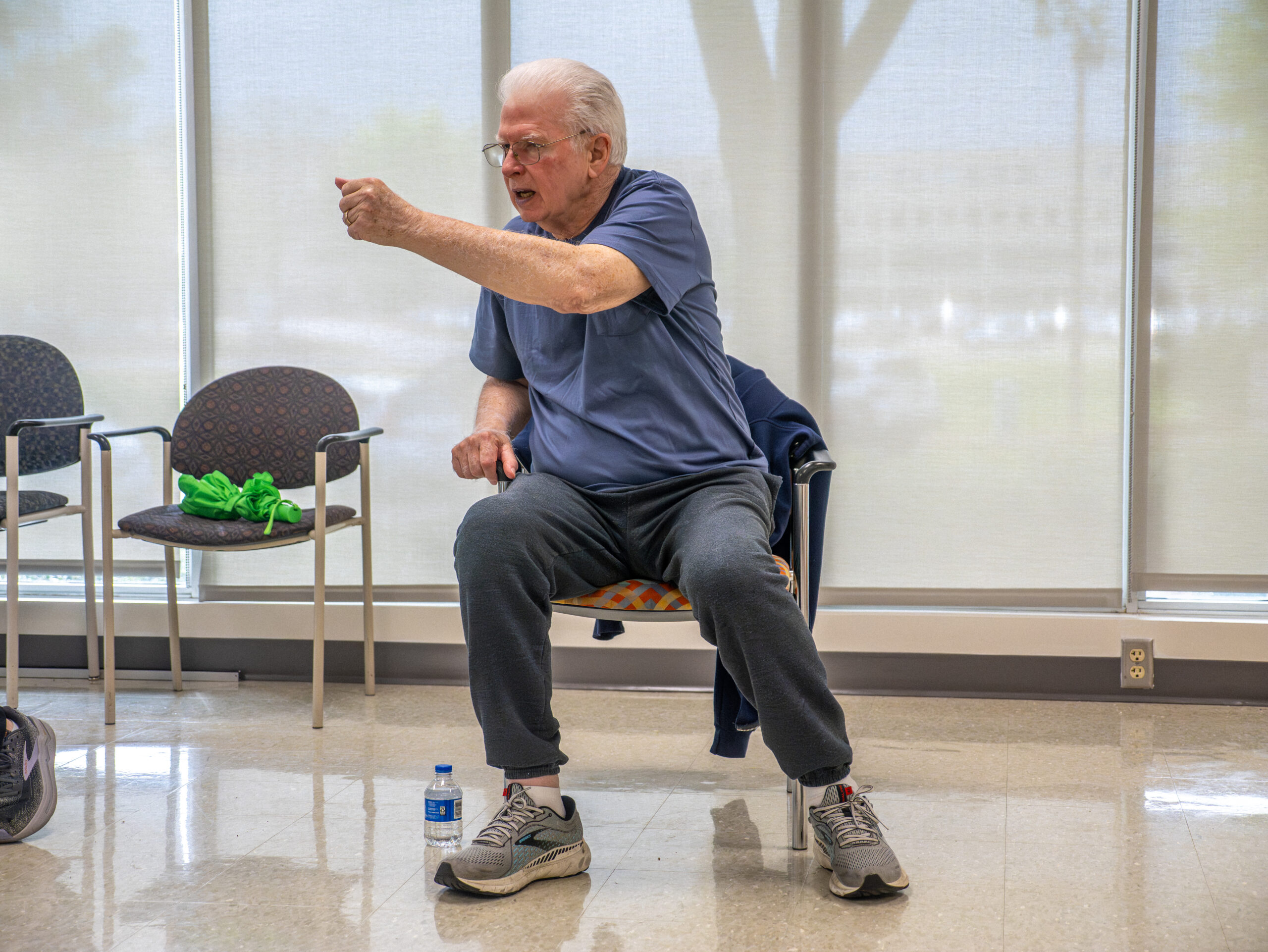
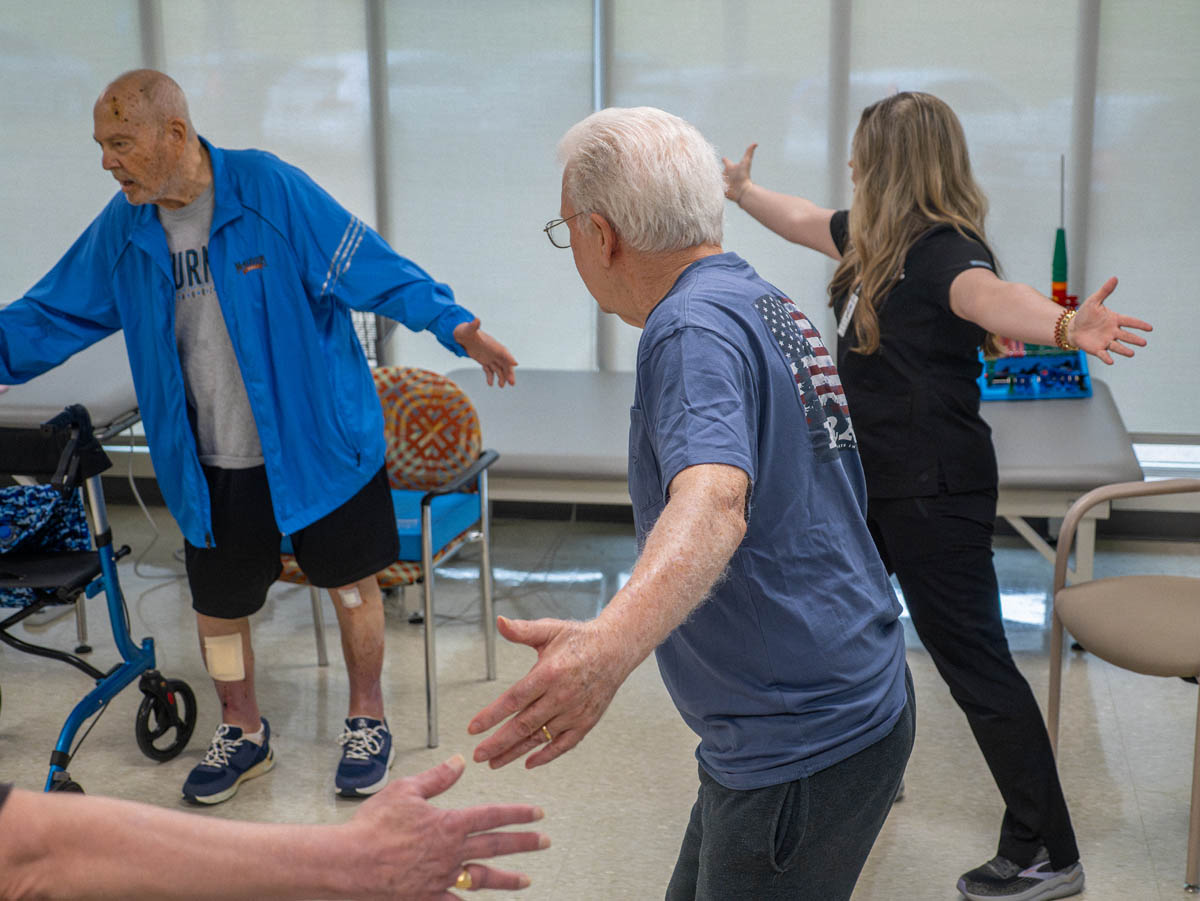
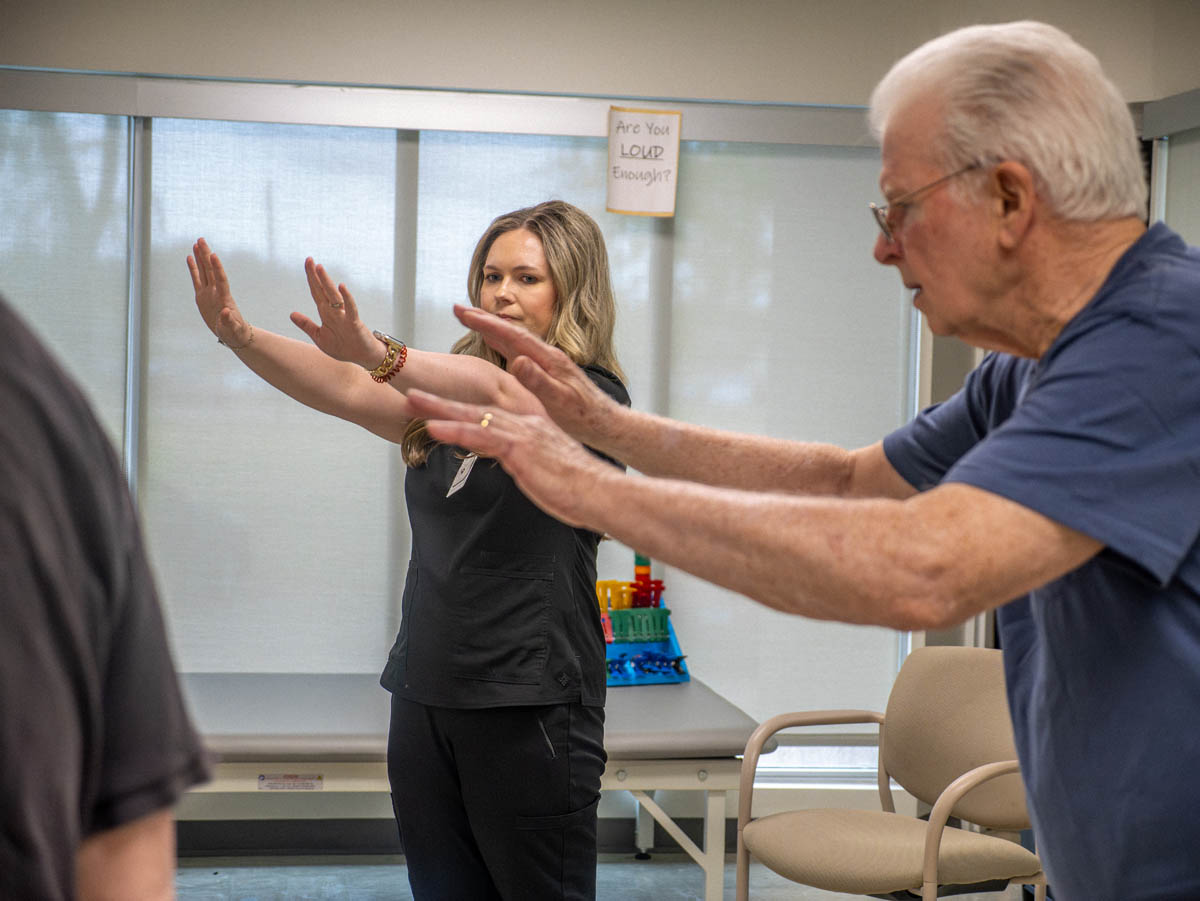
At Methodist Rehab, we offer the Lee Silverman Voice Treatment (LSVT) BIG and LOUD program, and it’s designed to directly counter that.
“There are two parts to the program, BIG and LOUD. The BIG program focuses on large movement patterns and balance, and the LOUD program focuses on vocal strength and clarity.” Winstead explains.
What sets it apart is its precision.
“It’s an evidence-based program specifically for Parkinson’s,” she says. “We focus on increasing the amplitude of movement, helping patients move bigger. What feels exaggerated to the patient is often a normal movement. We are retraining the brain to recognize what normal feels like again.”
The program is structured, consistent, and demanding by design.
“It involves eight maximal daily exercises performed for four weeks,” Winstead says.
Patients practice “big walking,” focusing on longer steps and intentional arm movement. They work through balance challenges on different surfaces. They break down everyday tasks into manageable components.
“If someone is struggling to get out of bed or out of a car, we don’t just practice it. We break it down and rebuild it,” she says, “We focus on the things that matter most to the patient, like dressing, cooking, or managing buttons and zippers. And that’s where our occupational therapists play a big part. The goal is always independence.”
Finding Your Voice Again
Parkinson’s often quiets more than movement. It quiets communication.
“Many patients experience a softer voice and less clarity,” she says, “That can make it difficult to be heard and understood.”
The LSVT LOUD program addresses that loss directly.
“And this is where our speech therapists come in. They help patients strengthen their voice and improve communication,” Winstead explains. “And just like movement therapy, it relies on repetition.”
The Weight of Losing Independence
For many patients, physical symptoms are only part of the story.
“It can impact confidence in a big way,” Winstead says, “People may feel insecure in social situations or frustrated when they cannot do things they used to do. Most people don’t want to rely on others for simple things. That is one of the hardest parts.”
Parkinson’s also brings uncertainty. Questions about progression. Fear of what comes next. But this is where therapy does more than strengthen the body. It restores belief.
“We identify what the patient is struggling with and make those goals specific. As they improve in those areas, their confidence grows. As balance improves, fear of falling slowly decreases. As tasks become easier, independence returns. They become more willing to engage in daily life again,” she says.
The Evidence Is in the Progress
The transformation is not theoretical. It’s visible.
“We see real changes from the initial evaluation to when they’re active in therapy,” Winstead says. “Patients notice it, and their families notice it.”
Movements become smoother. Balance becomes steadier. Tasks that once felt impossible become manageable again.
“It starts to feel natural,” she says. “That is when you know it’s working. But staying active is essential, not just for physical health, but for quality of life. Staying active helps maintain independence, and it supports overall well-being.”
No matter where someone is in their diagnosis, movement remains one of the most powerful tools available.
Parkinson’s changes the way the body moves. That much is certain. But it does not have to define the way a person lives.
With intention, with consistency, and with the right support, patients can continue to move forward.
Learn more about our outpatient therapy programs today.