
The Foundation of Recovery
Most people imagine that limb loss recovery begins with movement.
They picture the first fitting. The first steps between parallel bars. The moment someone stands again after losing a limb. But long before any of that happens, there is another phase of recovery that receives far less attention. It happens in hospital rooms, therapy spaces, and quiet moments when progress is not always visible yet.
It begins immediately after surgery.
Clinical Manager Larry Word, CPO, FAAOP, says many people are surprised to learn how early the recovery process truly starts.
“That process begins right after surgery, if possible,” he said.
For patients recovering from an amputation, those first days are not passive. Even while the body is healing, clinicians are already thinking ahead to what the patient will eventually need in order to safely and successfully use a prosthesis. That future starts with protecting the body in the present.


The earliest priorities are often the least visible.
Immediately after surgery, the focus is not on prosthetic devices or walking again. The body first must stabilize and heal. Wound care becomes one of the most important parts of daily recovery, and clinicians are intentional about monitoring the surgical site.
Bret Lee, CPO, says this stage requires close attention and consistency.
“During the acute care phase, wound care is changing dressings and watching for signs of infection,” he said. “We make sure that we teach our patients and their caregivers how to properly apply compression and what signs of trouble to look out for.”
As healing progresses, compression is often introduced as soon as the physician allows it. Compression in a patient experiencing limb loss involves the application of external pressure to the residual limb. While compression may seem like a small detail, clinicians say it plays a major role in recovery.
“Limiting residual limb edema, which is a buildup of fluid in the remaining limb, helps facilitate healing,” Larry explained.
Swelling control is not simply about comfort. Excessive swelling can delay healing and make future prosthetic fitting more difficult. Compression therapy helps shape and stabilize the residual limb while supporting the healing process.
Lori Verhage, CPO, says this early phase is important for more than just physical healing.
“It’s very important in the early healing process,” she said. “It helps to reduce edema in the residual limb. It can also help with limb sensitivity.”
Recovery begins long before a prosthesis is introduced.
One of the biggest misconceptions about limb loss recovery is that progress begins when a prosthetic device enters the picture. In reality, clinicians say some of the most important work happens long before that stage. Even in the earliest days after surgery, patients are encouraged to preserve strength, endurance, and range of motion as much as possible.
Larry says maintaining those things early can directly impact how successful someone will be later.
“A lack of endurance and strength, along with joint contractures, can delay that first step,” he said.

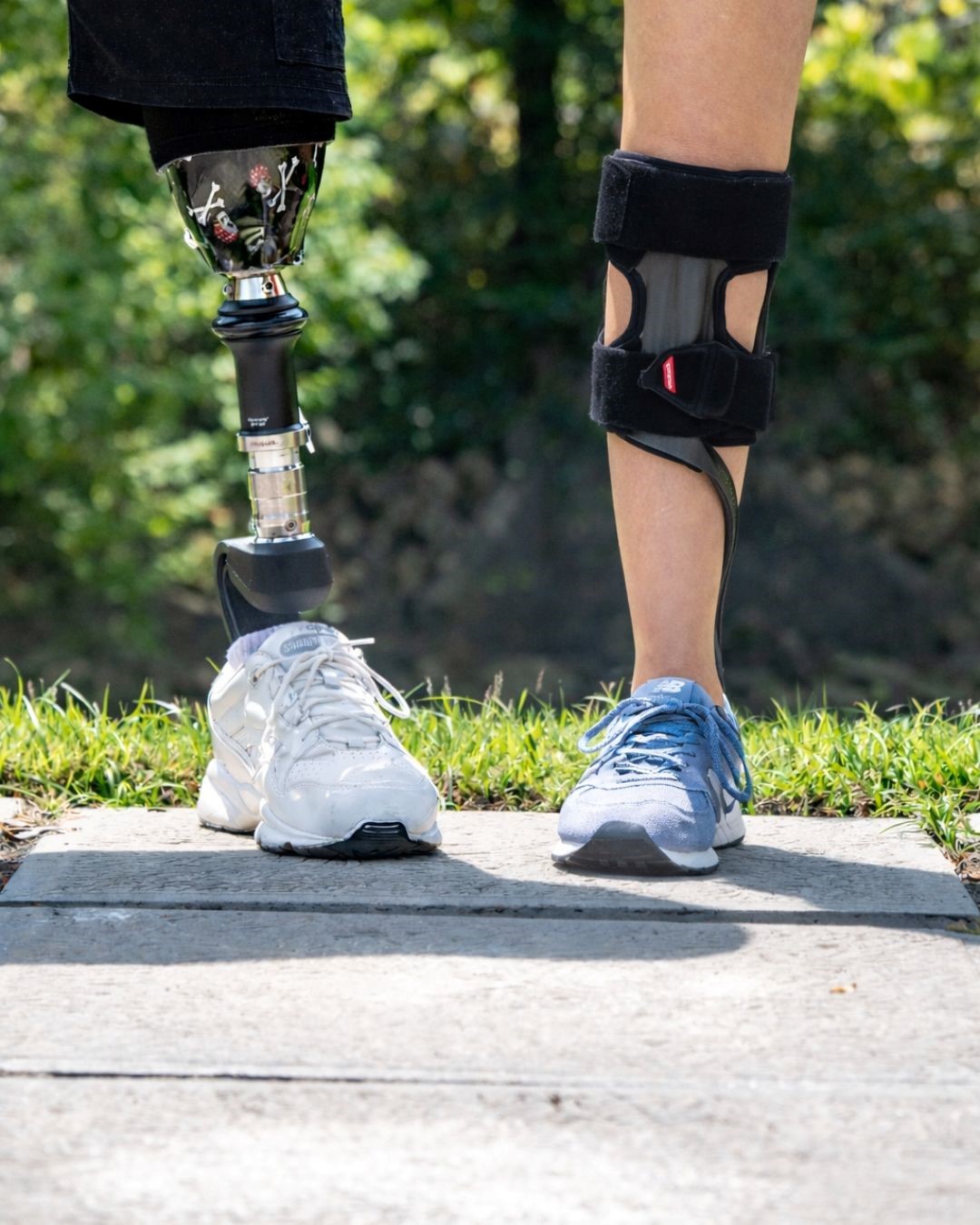
Without proper positioning and therapy, joints can stiffen and muscles can weaken in ways that make prosthetic use more difficult. That is why rehabilitation often begins quietly and gradually, even while healing is still underway. Patients may work on gentle exercises, positioning techniques, and mobility training designed to protect future function. What looks like stillness from the outside is often active preparation underneath.
Every recovery follows its own timeline.
One of the first questions many patients ask is how long it will take before they receive a prosthesis.
The answer is rarely simple.
“People tend to believe that there is a standard period of time between surgery and receiving a prosthesis,” Larry said. “I explain to folks that the period of time varies from person to person and the factors that led to the amputation.”
Healing depends on many factors, including overall health, circulation, medical conditions, infection risk, and the condition of the residual limb.
Before prosthetic fitting can even be considered, clinicians must determine whether the body is physically ready for that next stage.
“The person’s functional potential has to be assessed using an amputee mobility prediction tool,” Larry explained. “Other medical conditions occurring simultaneously can limit a person’s strength and endurance, making walking with a prosthesis very hard or even dangerous.”
For some patients, the process moves relatively quickly. For others, recovery may require more time and medical support before prosthetic planning becomes appropriate. That uncertainty can be difficult, especially for patients eager to regain independence. But clinicians emphasize that recovery cannot safely be rushed.
The work happening now shapes everything later.
While this stage of recovery may not include the visible milestones people often associate with rehabilitation, clinicians say it may be one of the most important phases in the entire journey.
Everything that happens early influences what becomes possible later.
Compression. Wound care. Range of motion. Conditioning. Positioning. Skin integrity. Healing. All of it matters.
Larry says the period between surgery and prosthetic fitting is critical because it creates the foundation that future mobility depends on.
“That period of time is important in terms of maintaining conditioning, range of motion maintenance, using compression therapy and wound care,” he said.
Before a prosthesis can be designed, before standing can happen, before walking can begin, the body has to be prepared to support all of it.
And that preparation starts much sooner than most people realize.
As the body begins to heal and stabilize, recovery slowly shifts into a new phase. The focus is no longer only on protecting the surgical site. It becomes about preparing the residual limb and the patient for what comes next.
This is where healing turns into readiness.