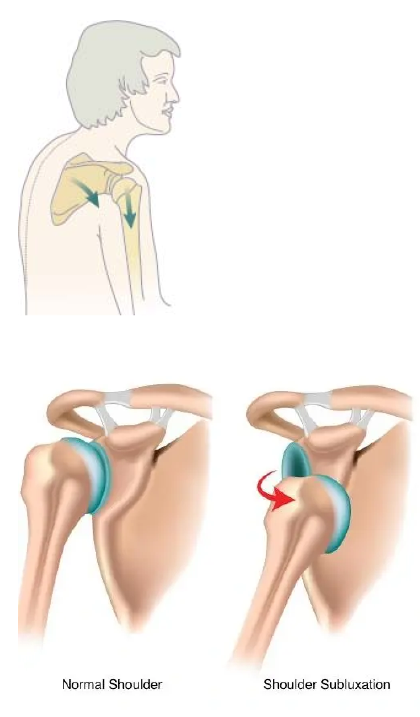
After a stroke, weakness and changes in muscle control can affect the shoulder and arm. The shoulder may become painful, lose proper alignment, or develop subluxation (partial separation of the shoulder joint). Proper positioning and handling can help prevent injury and reduce pain.
Protection is important!
- DO NOT pull on the affected arm or lift the person under the affected arm.
- Support the affected arm during rest, transfers, walking, and personal care, including dressing and bathing.
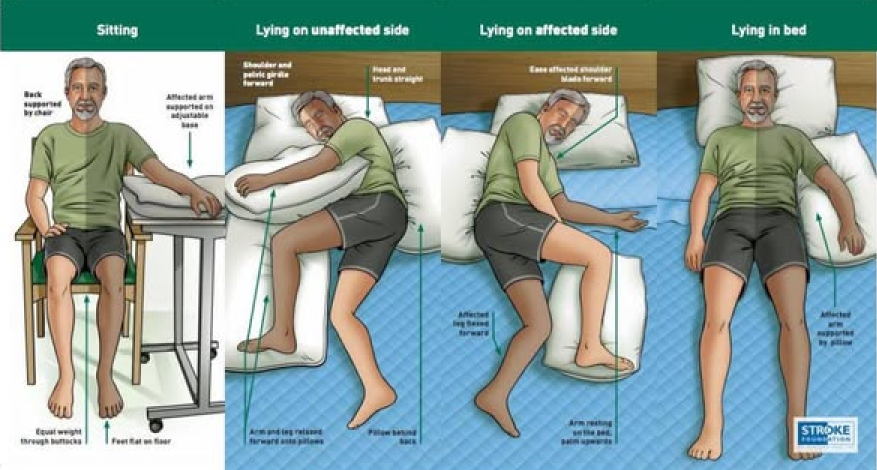
- Position the arm properly when sitting or lying down to keep it supported and aligned.
- Avoid forcing movement. Do not move the shoulder passively overhead (beyond 90 degrees) unless specifically guided by a trained healthcare professional using proper shoulder mechanics.
- Avoid overhead pulleys for shoulder exercises.
- Use a sling only if recommended by an occupational therapist (OT) or physical therapist (PT). Slings are not routinely recommended and should be used according to the individual’s care plan.
How to Position the Affected Arm
- Lying in bed: Use pillows to support the affected arm and shoulder.
- Sitting: Support the arm with a properly fitted lap tray, arm trough, or pillow, as recommended by an OT or PT.
- During transfers, standing, and walking: Protect and support the affected arm. Never use it to pull, lift, or reposition the person.
Remember
Proper positioning, support, and safe handling are essential to protecting the shoulder after a stroke. Follow your OT’s or PT’s recommendations for positioning, exercises, and equipment, and ask for a demonstration if you are unsure how to move or support the arm.
If shoulder pain develops or worsens, notify your healthcare provider or therapist. Early attention can help prevent further complications.