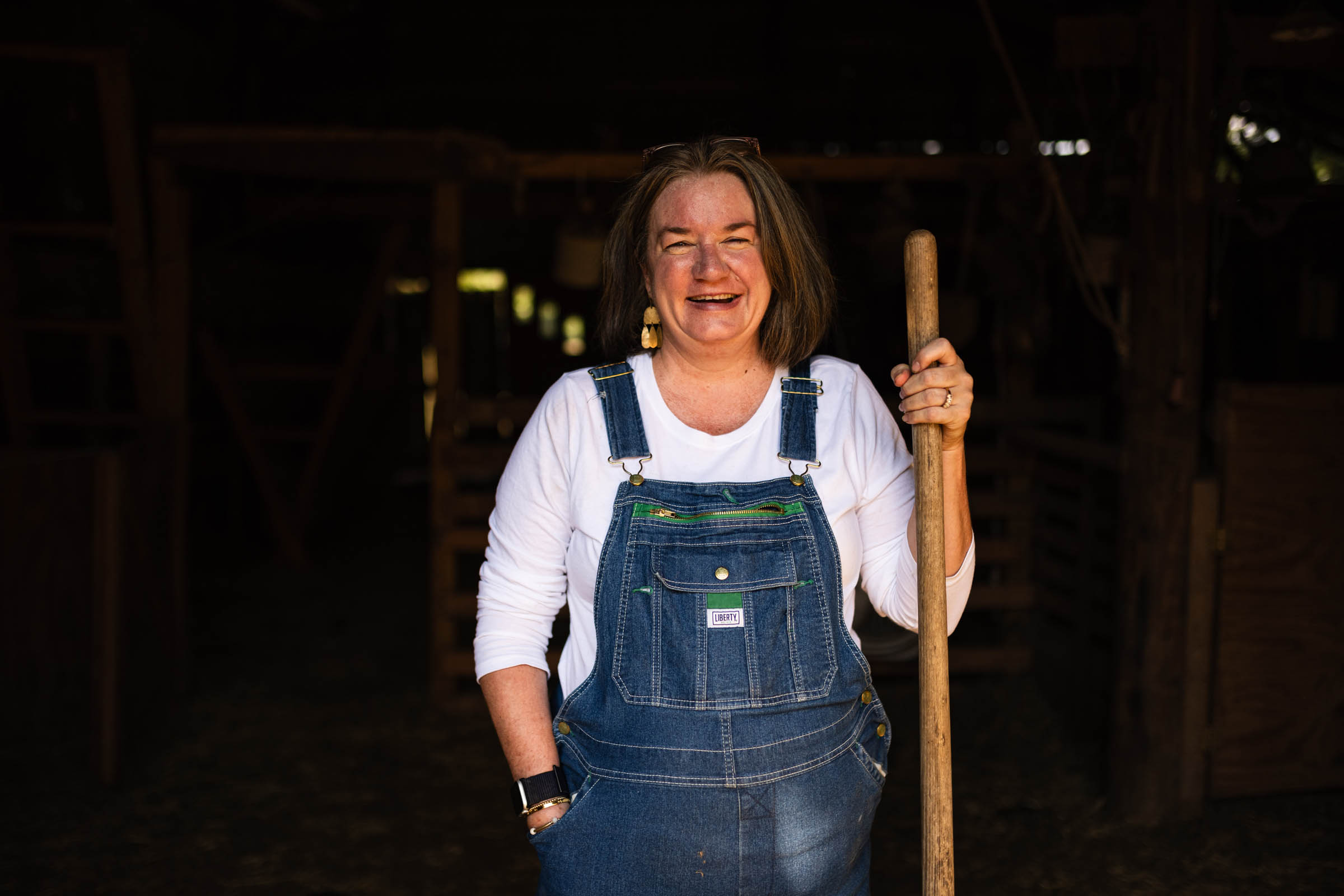
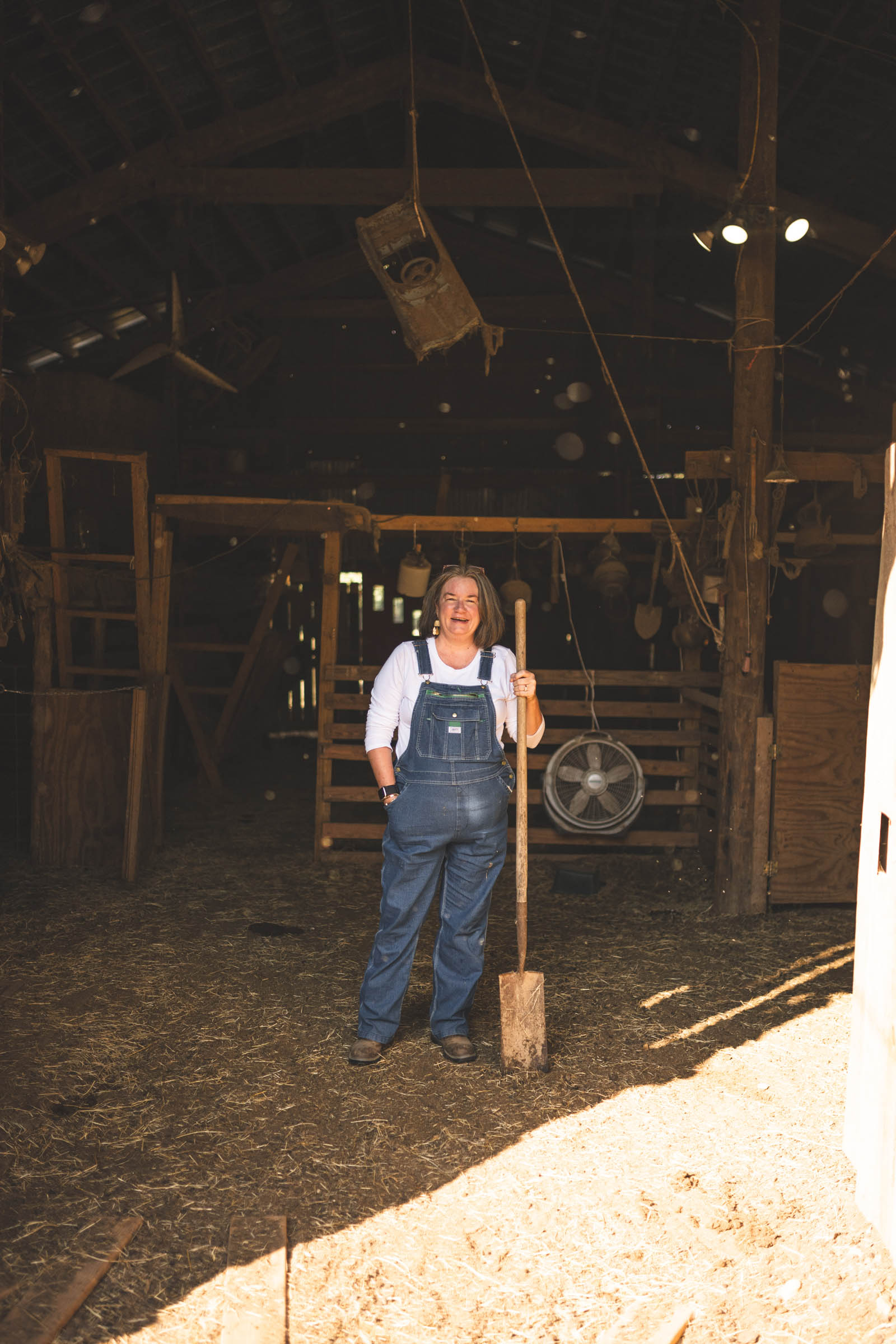
Two and a half years after a debilitating stroke, Amy Degrado is back to the life she knows on the farm she loves.
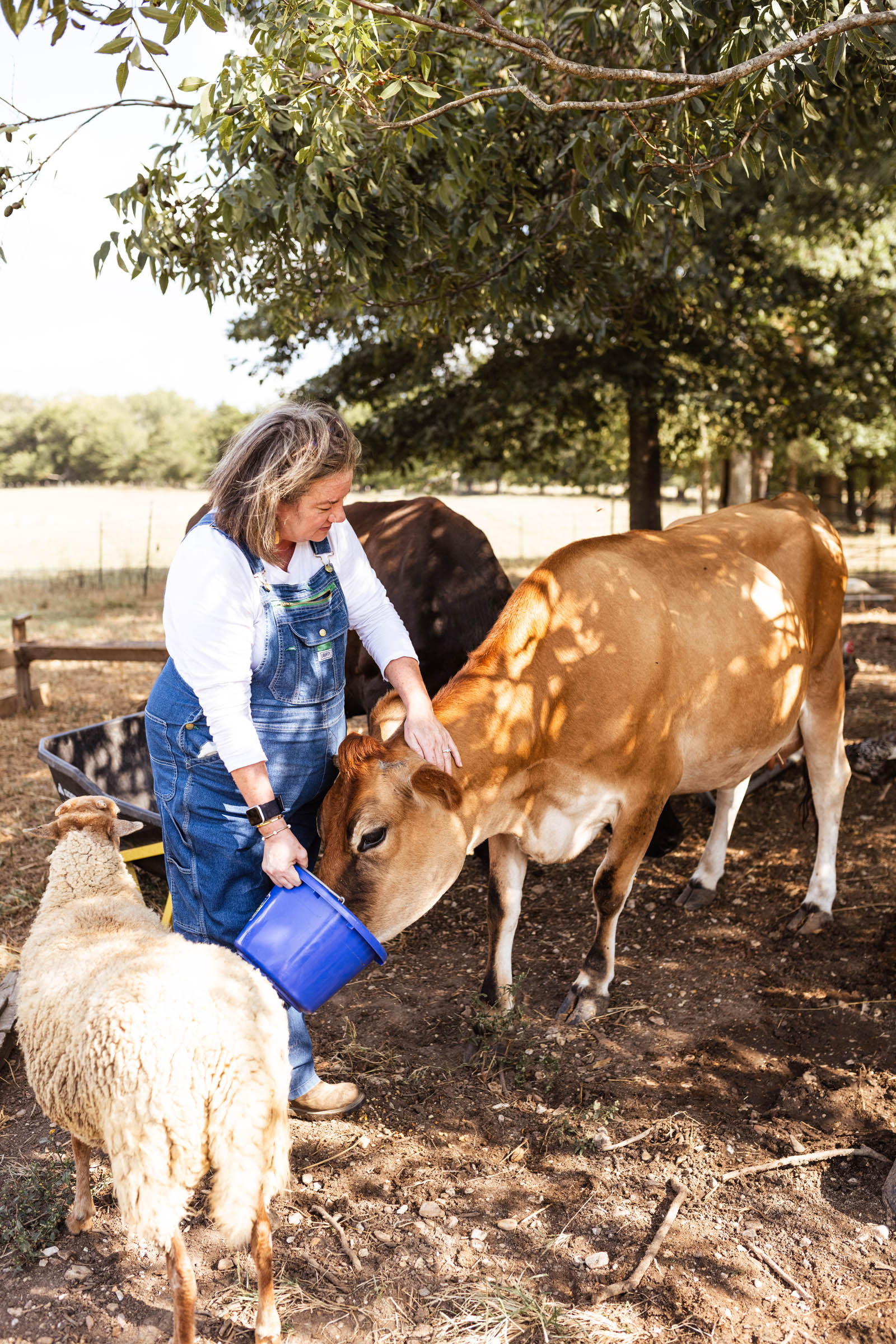
One of Degrado’s treasures is her small farm in Benton, Miss., which is home to cows, goats, piglets, rabbits, chickens, ducks, bees, dogs, cats, and her garden. On a Sunday morning in January 2023, as she ventured out for a routine chore, her entire world — and body — flipped: a single kick to the head from a spooked cow caused a massive hemorrhage in her brain.
“She kicked me hard enough that I did a backflip and landed on my milking stool,” Degrado recalled.
Admitted for inpatient treatment with her leg dragging behind her and weakened muscles in her mouth and face, Degrado grew restless with the prescribed bed rest and slow pace of her inpatient therapy schedule. She missed her home and her independence, so after just a few short days, she transferred to Methodist Rehabilitation’s outpatient program, where she began to improve significantly.
Eventually, Degrado proved to be an ideal candidate for Methodist Rehabilitation’s Quest program, which provides longer intensive and specialty outpatient care. Her therapists helped her regain the skills she once had and relearn everyday tasks. Degrado says that her therapy team was her saving grace.
The Quest program is for individuals on a “quest for independence.” It’s designed for patients like Degrado who have specific goals for getting back to their lives and are willing to put in the work to get there. Methodist Rehabilitation’s Quest team is uniquely resourceful, working with each patient to tailor their therapy to their personal lives and goals. Degrado’s team trekked out to the farm and assessed her day-to-day life, then put that information to use, developing a rehabilitation plan centered around her return to farming and tackling chores solo. Degrado recalls that one of her therapists brought in 50-lb. weights similar to the feed bags she was familiar with hauling around and created a routine to strengthen those same muscles.
“These therapists were in it with me,” Degrado explained. “I still remind myself of Cassie telling me that ‘progress isn’t linear.’ And now, when I have a bad day, I remind myself that, ‘You know what, progress isn’t linear. It’s going to be ok.’” Degrado is now back to her old routines and is immensely thankful for her family and their support throughout her treatment, as well as the therapists she grew to love.
“When I had the stroke, I was afraid that I was going to die,” Degrado said. “I was afraid that this was it. Then, within a couple of weeks of the stroke, I couldn’t walk, I couldn’t chew. But these people gave me the tools to get everything back—and they never left my side. I will never, ever be able to tell you how important they are to me.”
Despite the persistent numbness on her right side, Degrado has learned to use those muscles again, saying, “If you saw me working, you wouldn’t even know I had a stroke.” She is now able to spend more time tending to her farm than ever before, with a newfound appreciation for her body and how hard it works for her. Each day on her farm, she thinks about the team that helped her reclaim her life. “They helped me realize this is still a body I can be happy in. They made me want to live.”